


At this point, it might seem that everything that can be discovered on our Earth about our history has already been discovered. After all, hundreds of years of exploration have taken place. And yet, even nowadays, we still get surprised when someone manages to find something new.
Here, recently, renovation was being done on various major roadways in England, including the major highway A47. During works on the latter, an exciting discovery was made, which proved to be meaningful archeologically and historically to the region.
Norfolk is already known for having a rich history, but the newest discoveries are about to make it even richer
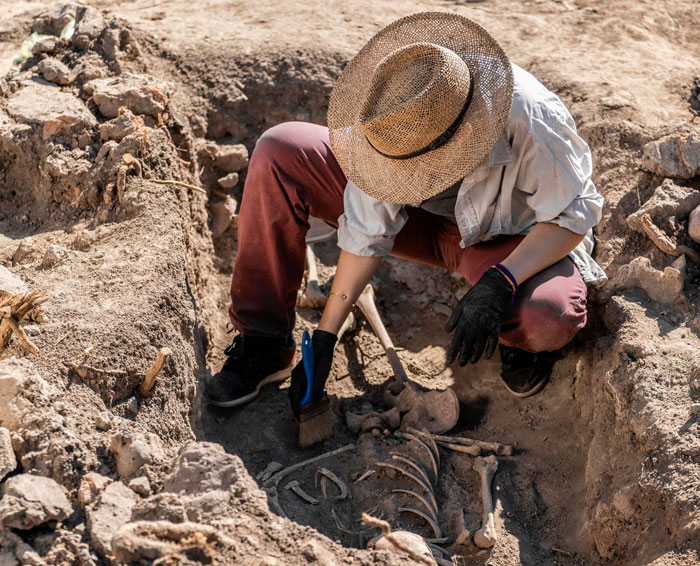
Image credits: PlaceboPill / Freepik (not the actual photo)
Turns out, during construction on the A47 highway, an exciting discovery was made
There is a ceremonial county in England called Norfolk. It has made its mark in history, as many rulers, from Celtic queens, the Roman empire, to Vikings and Saxons have shaped the place into the way it is now – a rich blend of heritage. The history of the region is so vast that even nowadays, new discoveries about it keep coming up.
During excavations at North Tuddenham and Easton, a whole medieval village was uncovered. With heavy equipment and hand tools, archeologists uncovered artifacts like battle and hunting spearheads, metal work, pottery, stone carvings, decorative buckles, and even animal remains. By the end, more than 600 sample buckets were used, and over 65 pounds (30 kilograms) of material were recovered.
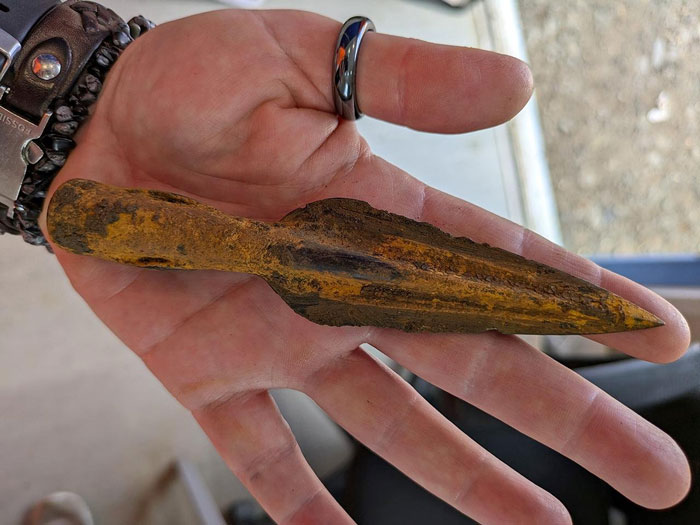
Image credits: Headland Archaeology
Basically, during medieval times, Norfolk was a prosperous civilization. People who lived there were farming, technology was advancing, and the population was growing.
Of course, it didn’t come without hardships. Some of the findings included a bone flute, which showed a deeply traumatic part of the place’s history.
Traces of a medieval village were found there, unlocking new historical points about the place
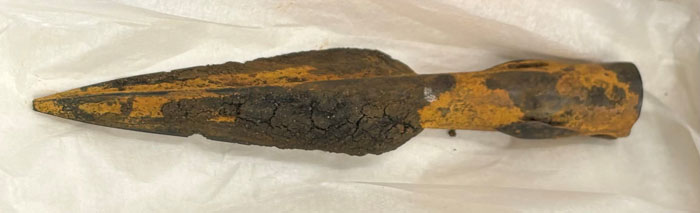
Image credits: National Highways: East / Facebook
Norfolk coincided with a climate change event called the ‘medieval warm period’ – when it started to get warmer and wetter, which made crops fail, exposing the population to famine and disease. Then, the Black Death came and wiped out over half of the population, causing villages to disappear.
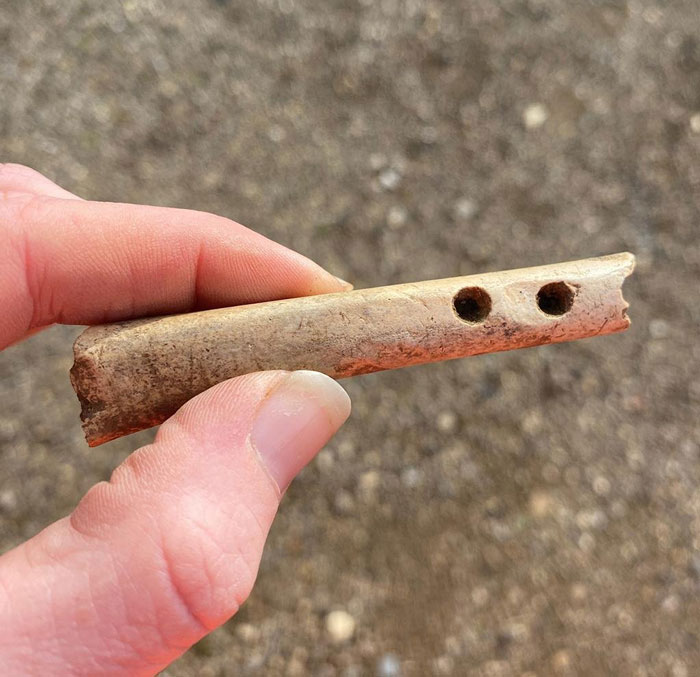
Image credits: Headland Archaeology
Along with the discovery of the village, other things were found as well, like a small, enclosed cemetery from the Roman period. Inside it, there were 14 grave cuts centered around a central grave, while outside, there was the boundary ditch for the cemetery. There were seven more grave cuts.
There was also a cemetery found, which featured interesting graves that are unique to the place
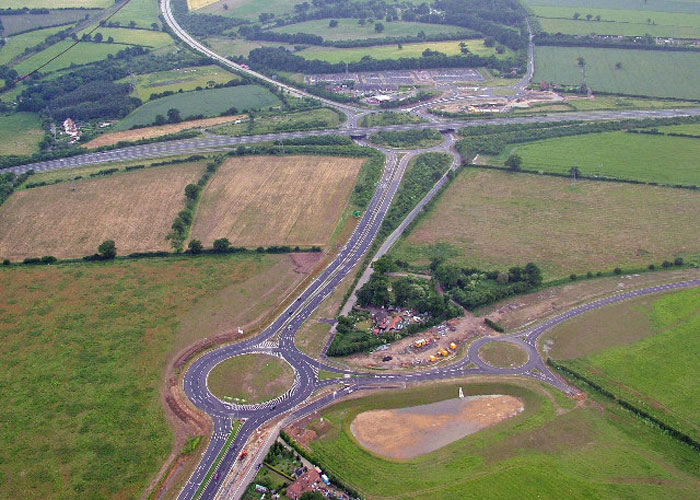
Image credits: Mark Boyer / Wikipedia
Technically, this kind of cemetery isn’t unexpected for rural Roman Britain, but this one might be a little unique. In its center, there’s a stone coffin carved from a single solid block of limestone. The burial inside is encased in gypsum before capping stones are placed on the coffin. Such a process includes pouring liquid gypsum over the individual, which sets to form a hard cast and preserves an imprint of the individual.
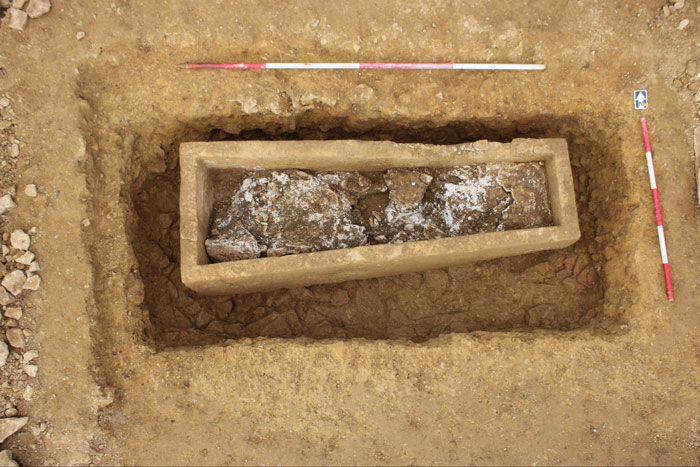
Image credits: Headland Archaeology
The thing is that gypsum burials are rarely found in rural Roman Britain, as they’re more associated with prominent urban centers. The stone containing this burial was bulk lifted from the field and transported to Headland Archaeology’s offices in Silsoe, so it could be excavated away from the harsh elements onsite.
Additionally, this burial wasn’t even the only high-status grave in the newly uncovered cemetery. Turns out, many graves inside and outside of the boundary ditch contained large quantities of jewelry and other items.
Along with all of it, various historical memorabilia and rich grave goods were discovered too
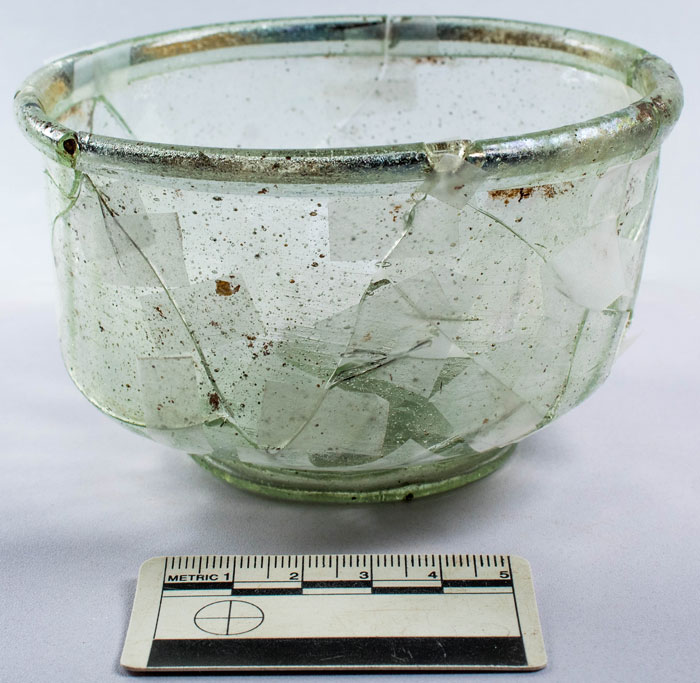
Image credits: Headland Archaeology
For example, one grave had a large quantity of grave goods placed above the feet of the buried person. It is guessed that this person was a woman of around 16-20 years of age. Her goods included things like a pair of silver earrings and plates, copper alloy bracelets, and rings. There was also another grave that contained goods like copper alloy bracelets, worked bone, a comb, and silver earrings.
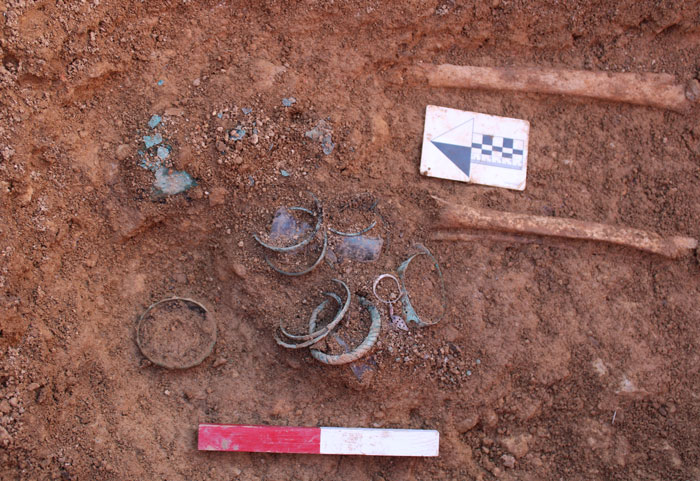
Image credits: Headland Archaeology
It’s hoped that the post-excavation analysis of all findings will answer the questions that arose during the discovery and will shed light on the region’s historical landscape and stories of people who lived and were buried there.
Archeologists hope that post-excavation analysis will answer the questions the discoveries made about the region’s history and people who lived there










0 Comments