

Introduction
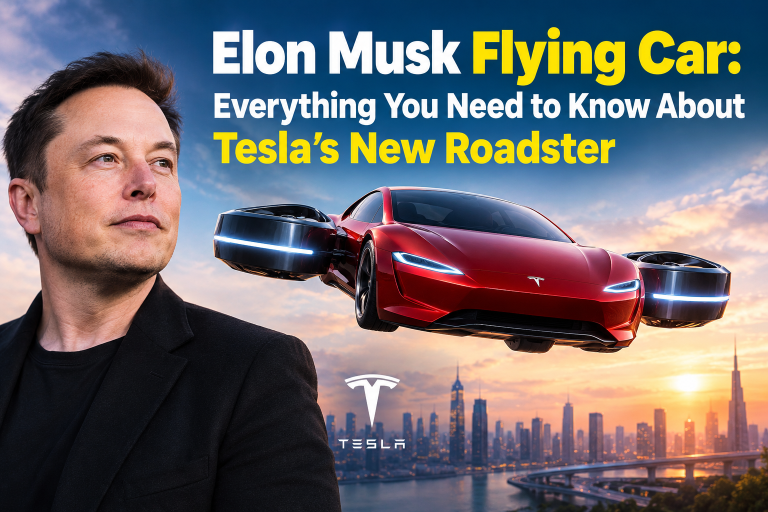
The idea of a car that can leave the ground and move through the air has fascinated people for generations. What once seemed possible only in science-fiction movies is now attracting serious attention from technology companies and automotive engineers. In October 2026, Tesla presented a dramatic demonstration of its redesigned Roadster, drawing attention to technology that allowed the vehicle to perform brief airborne maneuvers. The event also brought renewed interest in the phrase “Elon Musk flying car,” as viewers wondered whether flying vehicles could become part of everyday life. However, there is an important difference between a vehicle performing an impressive aerial stunt and a practical flying car that people can use on public roads. This article explores what Tesla demonstrated, what Elon Musk said, how the technology may work, and what buyers should understand before believing every claim circulating online.
What Happened During the Elon Musk Flying Car Demonstration?
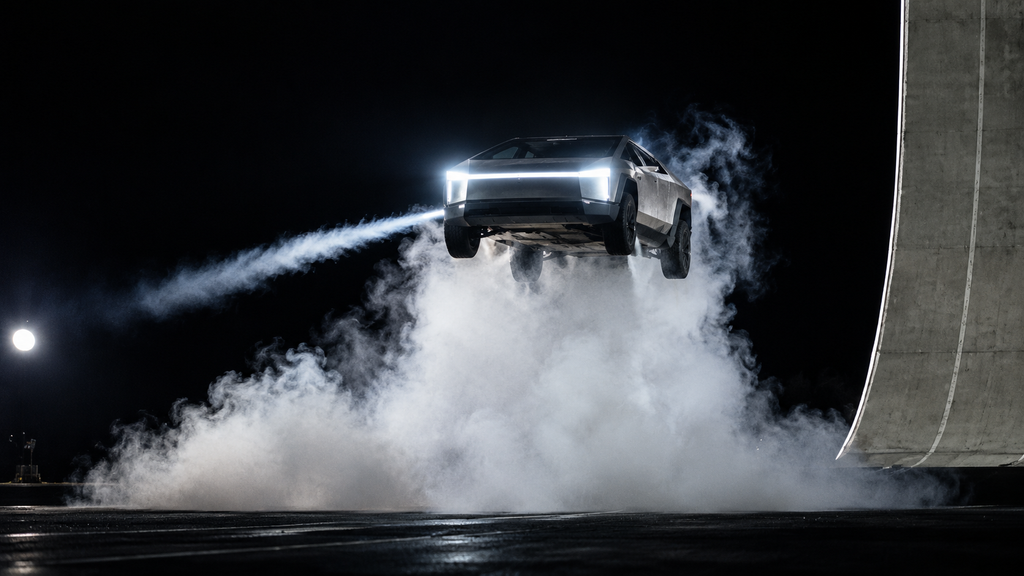
The Elon Musk flying car story received significant attention after Tesla demonstrated its next-generation Roadster at a SpaceX facility in Texas on October 15, 2026. During the presentation, the vehicle performed unusual movements, including driving along a specially designed ramp, briefly entering the air, rotating, and returning to the ground. The demonstration was different from a traditional sports-car launch because it highlighted technology associated with both vehicle performance and aerospace engineering.
According to reporting from Reuters, the redesigned Roadster was developed with technology associated with SpaceX, Elon Musk’s aerospace company. The demonstration showed that the vehicle could perform controlled airborne movements under specific conditions. However, these movements should not be confused with sustained flight like that of an airplane or helicopter. The event created excitement, but it also raised questions about safety, engineering, cost, and regulations. For readers following Elon Musk flying car news, understanding exactly what happened is the first step toward separating the demonstrated technology from future promises.
What Makes the Tesla Roadster Different From Ordinary Cars?
Traditional cars rely on their wheels to move across roads. Their engines or electric motors provide forward motion, while tires maintain contact with the ground. The redesigned Roadster introduces a different approach by combining electric vehicle technology with specialized systems intended to produce unusual movements and improve performance.
The most interesting part of the demonstration was the use of specialized thrust technology alongside a system designed to help the vehicle maintain contact with a surface during certain maneuvers. These features are far beyond what drivers would expect from a normal family car. However, they do not automatically make the vehicle suitable for everyday flying.
The Roadster is still fundamentally presented as a high-performance sports car, and its unusual capabilities are associated with particular configurations rather than ordinary electric vehicles. Tesla’s demonstration suggests that automotive design can borrow ideas from aerospace engineering, but turning those ideas into reliable transportation is a separate challenge. For now, the vehicle is better understood as an experimental performance machine than as a replacement for conventional cars or aircraft.
How Could Elon Musk Flying Car Technology Work?
The technology behind the Elon Musk flying car concept combines several engineering ideas. Electric motors can provide powerful acceleration, while specialized thrust systems can apply force in directions that ordinary wheels cannot. A vehicle using such technology may be able to rise briefly, change its orientation, or control its movement during a demonstration.
The redesigned Roadster demonstration also featured a suction-based system intended to help the car remain attached to a specially designed ramp. This is important because driving upside down or along unusual surfaces requires more than a powerful motor. Engineers must also consider grip, stability, vehicle weight, and how forces affect the car throughout the maneuver.
Nevertheless, performing a short aerial movement is much easier than developing a practical flying vehicle for everyday use. A real transportation system would need reliable controls, predictable performance, emergency procedures, and appropriate safety protections. It would also need to work in a wide range of weather conditions and environments. The technology is interesting, but the public should wait for detailed technical information and independent testing before drawing conclusions about its everyday usefulness.
Is Tesla’s Flying Car Available to Everyone?
One of the most common questions in Elon Musk flying car news is whether ordinary customers can purchase a vehicle that flies. The answer requires careful attention to the different Roadster configurations described around the October demonstration.
Reporting indicates that Tesla presented a regular road-oriented Performance configuration, a more specialized Thrust version, and a Rocket configuration associated with the full flight system. The Rocket version was described as invitation-only and not approved for public-road use. That means the vehicle shown performing aerial maneuvers should not be treated as a normal car that buyers can immediately drive through city streets.
Availability also involves more than placing a reservation. Manufacturers must build the vehicle, establish delivery arrangements, and satisfy relevant legal requirements. Buyers should examine official terms carefully and avoid assuming that a reservation guarantees a delivery date. Until Tesla confirms broader availability and regulators approve the relevant configuration, the flying capabilities remain separate from ordinary road transportation.
When Could the New Tesla Roadster Reach Production?
Production timing is another major subject in the Elon Musk flying car discussion. At the October 2026 demonstration, Musk said that production was planned to begin in 2028. That announcement gives interested readers a timeline to follow, but a stated target is not the same as a guaranteed delivery date.
The Roadster’s history makes this distinction particularly important. Tesla originally announced its second-generation Roadster in 2017 and initially discussed production beginning in 2020. The project then experienced years of delays. Reuters reported that the latest production target comes more than a decade after the next-generation vehicle was first presented.
Developing an advanced sports car involves designing components, testing prototypes, preparing manufacturing facilities, checking reliability, and meeting applicable standards. Specialized flight-related equipment can add further complexity. These steps can affect both costs and schedules. Readers should therefore treat 2028 as Tesla’s announced target, not a promise that every configuration will be available then. Future company announcements and independently verified production milestones will provide a clearer picture.
Could the Flying Car Change the Future of Transportation?
The Elon Musk flying car concept raises an exciting question: could vehicles eventually travel both on roads and through the air? The idea is attractive because many cities experience traffic congestion, long commuting times, and limited transportation options. A vehicle capable of leaving the ground might appear to offer an entirely new way to move around.
However, the practical challenges are substantial. Flying vehicles need safe places to take off and land, reliable control systems, sufficient energy, and rules governing where they can operate. They may also create noise and require special infrastructure. If many vehicles attempted to fly over crowded cities, authorities would need systems to manage their movements and prevent conflicts.
The Roadster demonstration does not establish that Tesla has solved these problems. Its significance lies in showing an unusual combination of vehicle and aerospace technologies. Other companies are also exploring electric aircraft and air-taxi systems, although those designs can differ greatly from rocket-assisted sports cars. The future may include several kinds of advanced transportation rather than one universal flying car that replaces every vehicle on the road.
What Should Readers Believe About Elon Musk Flying Car News?
Online headlines can make emerging technology sound more developed than it really is. A video showing a car briefly airborne may lead viewers to assume that the vehicle can fly long distances, avoid traffic, or operate like a helicopter. Those conclusions require evidence beyond a demonstration.
Readers should begin by checking whether a claim comes from Tesla, an independent news organization, an engineering expert, or an anonymous social media account. They should also look at what the vehicle actually did. A short jump, an assisted rotation, and sustained controlled flight are three different things.
It is equally important to distinguish between announced plans and completed achievements. Tesla’s stated production target is useful information, but it does not confirm that the vehicle has completed every test required for customer delivery. Responsible reporting should describe the October event accurately, explain what remains unknown, and update the story when reliable evidence becomes available. This approach helps readers understand the technology without exaggeration.
Conclusion
The Elon Musk flying car demonstration has brought fresh attention to the possibility of combining electric vehicles with aerospace-inspired technology. Tesla’s redesigned Roadster performed unusual airborne maneuvers, showing a concept that is very different from an ordinary sports car. The demonstration was notable, but it did not prove that a practical flying car is ready for everyday transportation.
Tesla has announced a production target of 2028, while the specialized Rocket configuration has been described as invitation-only and not approved for public-road use. Questions about safety, regulation, cost, manufacturing, and real-world performance still matter. For readers following Elon Musk flying car news, the best approach is to stay curious while checking claims carefully. The Roadster may represent an interesting engineering development, but its long-term importance will depend on what Tesla can demonstrate, manufacture, and legally offer to customers in the coming years.
FAQ
What is the Elon Musk flying car?
The term refers to Tesla’s redesigned Roadster and its demonstrated airborne capabilities. The specialized configuration uses technology associated with SpaceX. It should not be confused with a conventional aircraft or a fully developed flying taxi.
Did Tesla demonstrate a flying car in October 2026?
Tesla demonstrated a Roadster performing brief airborne maneuvers at a Texas facility. The event showed unusual movement, but it did not establish that the vehicle could sustain ordinary flight over long distances.
When is the Tesla Roadster expected to enter production?
Elon Musk announced a production target of 2028. However, the project has experienced previous delays, so interested buyers should monitor official updates rather than assume the date is guaranteed.
Can people drive the flying version on public roads?
The Rocket configuration has been described as not approved for public-road use. Buyers should check the legal status of each configuration before making assumptions about where it can operate.
Is the Elon Musk flying car a practical everyday vehicle?
That remains uncertain. Everyday use would require extensive testing, safety measures, legal approval, and suitable operating conditions. The demonstration alone does not answer those questions.


0 Comments