
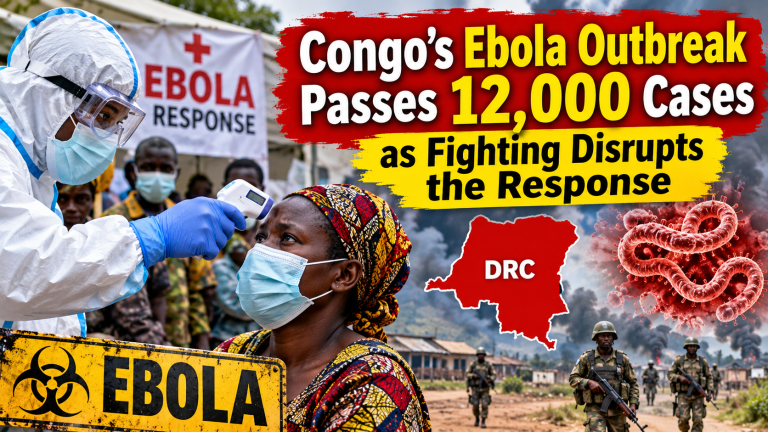

The number of confirmed Ebola cases in the Democratic Republic of Congo has passed 12,000, government data showed on Thursday, as escalating fighting in the east disrupts efforts to contain the country’s deadliest outbreak on record.
Confirmed infections have reached 12,021, including 5,904 deaths, according to figures released by the country’s health authorities on 26 November. The case fatality rate stands at about 49.1 per cent — meaning roughly one in every two confirmed patients has died.
The outbreak, which was declared in mid-May 2026, is the 17th Ebola outbreak recorded in DR Congo and the deadliest the country has ever faced. It is also the second-largest Ebola outbreak ever recorded anywhere in the world, behind only the West Africa epidemic of 2014–2016.
It is caused by the rare Bundibugyo strain of the Ebola virus, for which there is no approved vaccine or specific treatment. Cases have now been reported in eight of Congo’s 26 provinces, mostly in the east, with Ituri province the worst-hit area. The town of Bunia, in Ituri, has become the hub of the response.
Fighting blocks the response
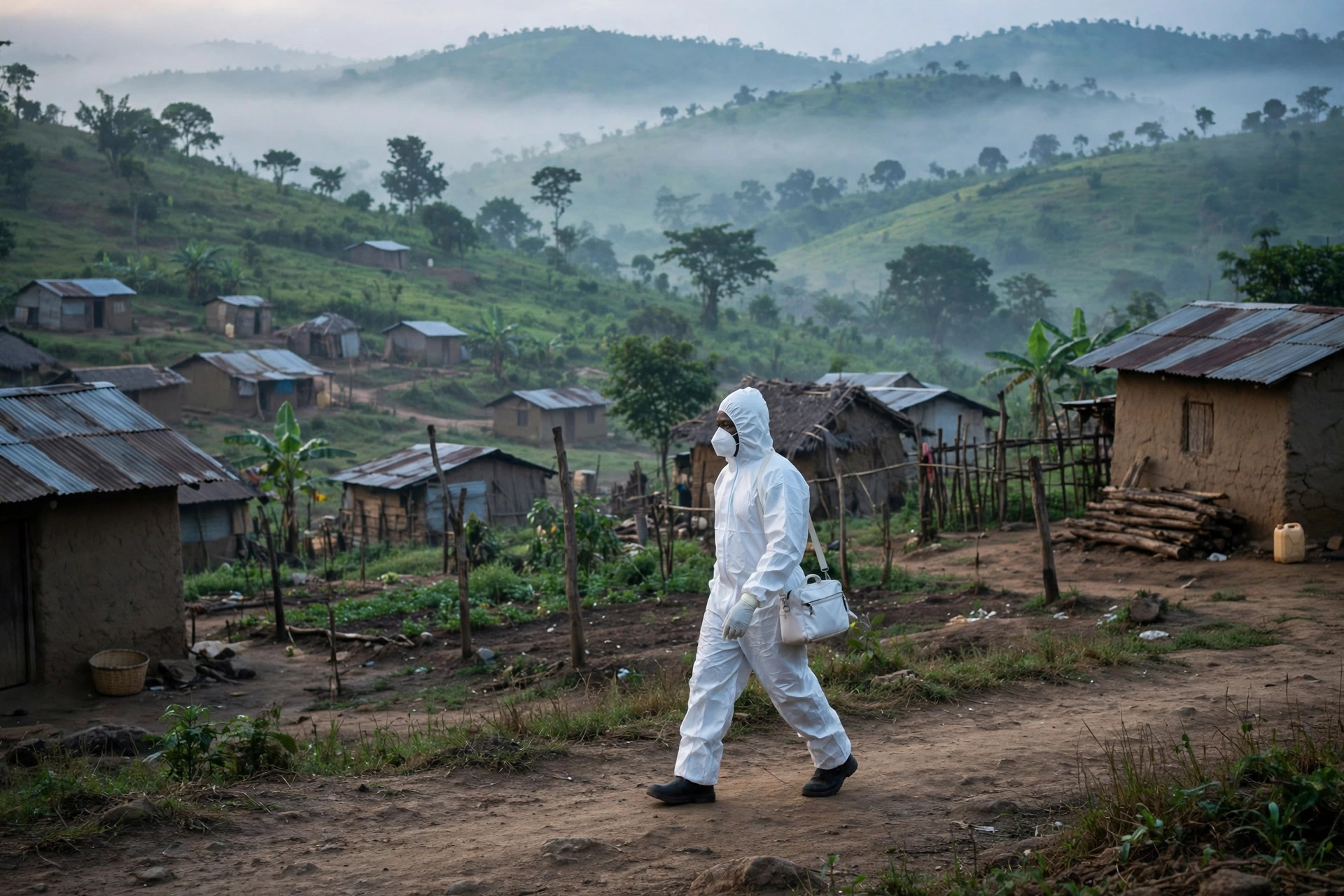
What makes this outbreak so difficult to control is not only the virus, but the war around it. Fighting between the Congolese army and rebel groups resumed on Thursday near Iga Barriere, about 25 kilometres north of Bunia, forcing health workers out of the area.
The World Health Organization said about a dozen of its staff had to be evacuated to Bunia after being trapped for three days in a hospital in Akwe. The WHO says fighting has kept its teams out of some communities and left treatment centres short-staffed, hindering the core work of containment: isolating patients, tracing their contacts and safely burying the dead.
Rebels had declared a ceasefire in May, but fighting has continued, sending displaced people towards Bunia and other towns — movement that health officials fear could carry the virus further.
A global emergency
The WHO continues to classify the outbreak as a Public Health Emergency of International Concern, a status it kept in place on 18 November. Earlier in the outbreak, a small number of cases were also reported in neighbouring Uganda, Kenya and Nigeria.
This week, the WHO and the Africa Centres for Disease Control and Prevention unveiled an updated continental preparedness and response plan for the Bundibugyo virus, running from November 2026 through May 2027. The plan estimates that about $1.58 billion will be needed to support the next phase of the response across the region.
The scale of the crisis is now clear in the numbers alone: more than 12,000 confirmed cases in just over six months, a death toll approaching 6,000, and a response that must operate in the middle of an active conflict. Health workers on the ground say the outbreak will not be brought under control until they can safely reach the communities where the virus is spreading — and that, for now, depends on the fighting stopping.
Sources: Reuters (via Al Jazeera and The Straits Times); Xinhua; Philippine News Agency; Al Jazeera.

0 Comments