
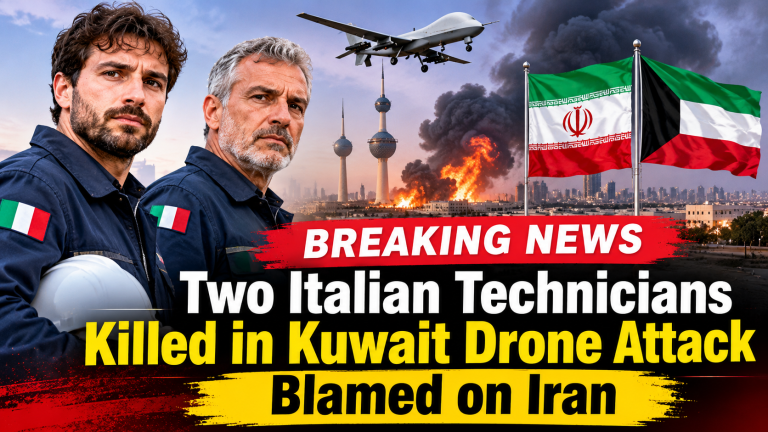

Two Italian nationals were killed in Kuwait on Thursday when drones struck a military air-defence site, in an attack that Kuwait and Italy have blamed on Iran — an accusation Tehran has firmly denied.
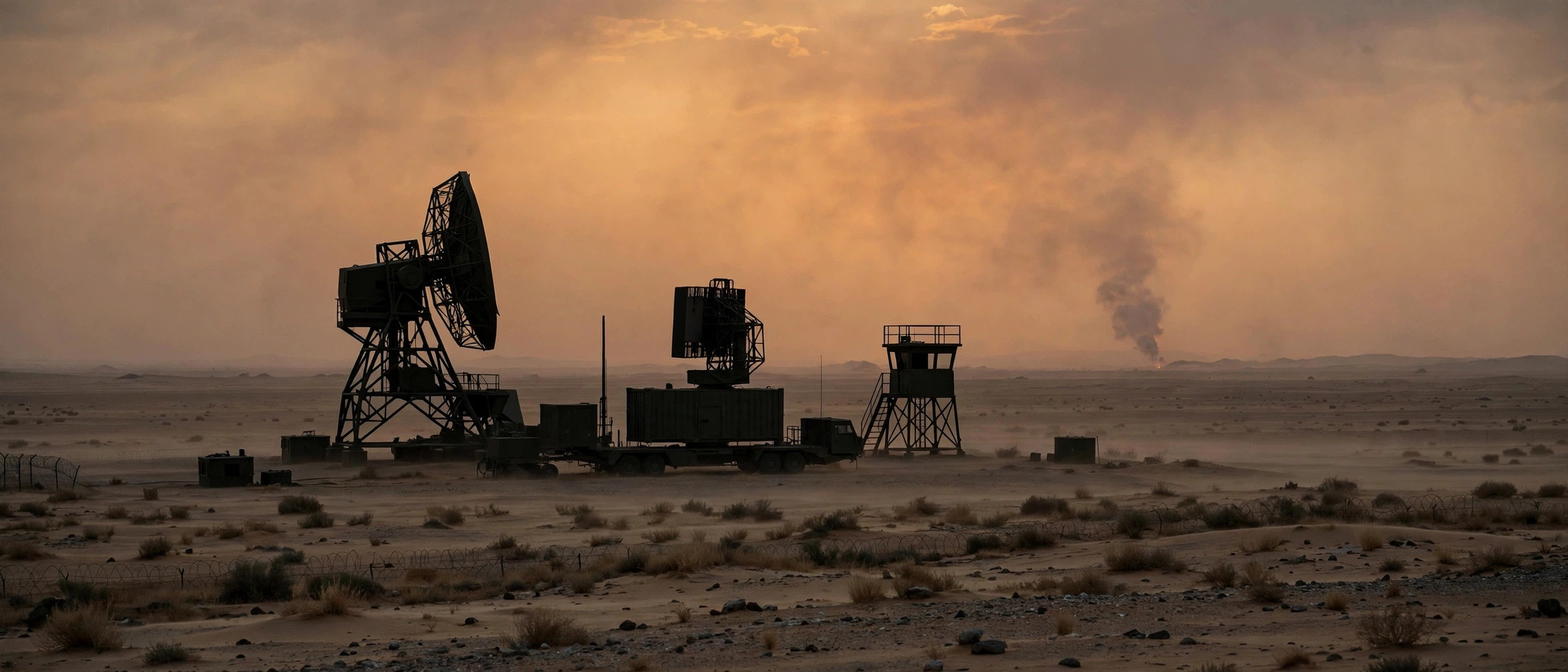
The two men were civilian technicians working for Rheinmetall Italia, the Italian unit of the German defence group Rheinmetall. They were identified by the Italian news agency ANSA as Antonio Saccoccio, 65, from Formia, and Emanuele Lo Russo, 36, from Rome. They had been carrying out maintenance work on detection antennas for the Skyguard air-defence system used by Kuwait’s armed forces.
Italian Foreign Minister Antonio Tajani told the Senate in Rome that “several drones of Iranian origin targeted Kuwaiti military installations”, including the air-defence detection station where the two technicians were working. “A powerful explosion occurred, and, according to reports reaching us from Kuwait, both of our fellow citizens have unfortunately died,” he said.
Kuwait’s Defence Ministry said its armed forces had detected several hostile drones entering Kuwaiti airspace and intercepted them, but falling debris struck four people at what the ministry described as a “vital site”: the two Italians, a Kuwaiti national and a Pakistani national. All four were taken to hospital, but the two Italians later died of their injuries. The ministry also reported unspecified material damage.
Iran denies responsibility
Iran has denied carrying out the attack. Brigadier General Abolfazl Shekarchi, a senior spokesperson for Iran’s armed forces, said: “No military or offensive operations whatsoever have been conducted by the Armed Forces of the Islamic Republic of Iran in the region.” Iran’s Foreign Minister Abbas Araghchi also insisted in calls to his Kuwaiti and Italian counterparts that his country was not behind the strike, and Iran’s embassy in Rome categorically denied the claims in a post on X.
Tajani, speaking to reporters later on Thursday, maintained that the drone used in the attack was manufactured in Iran. The dispute over who launched the drones is now at the centre of the diplomatic fallout, with Italy demanding answers and the European Union’s chief, Ursula von der Leyen, calling for more pressure on Tehran after the two deaths.
The secretary-general of the Gulf Cooperation Council, Jasem Mohamed Albudaiwi, strongly condemned what he called Thursday’s “brutal” attack.
A region on edge
The attack came while Kuwait’s National Guard and military were meeting an Italian delegation visiting the country, including the commander general of the Italian Carabinieri, Lieutenant-General Salvatore Luongo, and the Italian ambassador to Kuwait.
It also followed days of heightened tension in the Gulf. Kuwait had activated its air defences to counter drone strikes launched by Iran just days earlier — the first such strikes since early September — and the wider region has seen a string of attacks on shipping and military sites around the Strait of Hormuz in recent weeks.
The United States, which has warned Tehran against further escalation, has said it is watching the situation closely. President Donald Trump has previously said that if the US strikes Iran again, a site known as Pickaxe Mountain would be among the targets.
For now, the focus is on the investigation into Thursday’s attack — and on whether the deaths of two European civilians working on a Gulf ally’s defences will push an already tense region closer to open confrontation.
Sources: Reuters; CNN; Al Jazeera; Arab News; Channel News Asia.

0 Comments