

Introduction
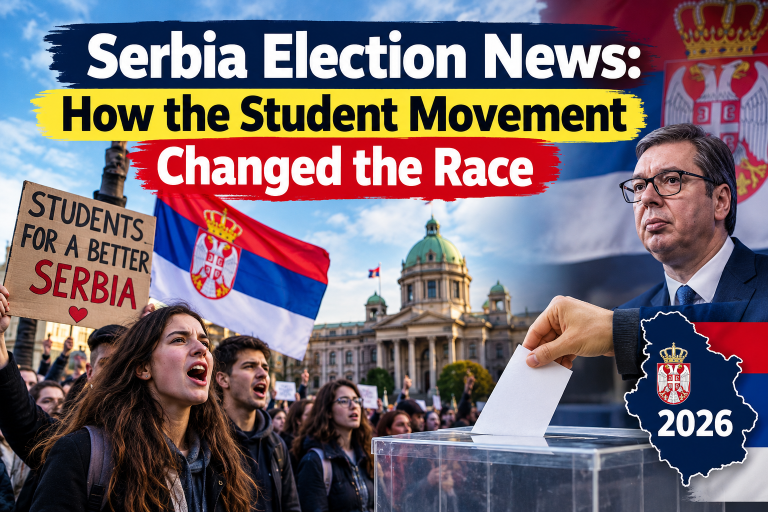
The Serbia election 2026 has marked a major turning point in the country’s political history. For nearly two years, a student-led movement had challenged the government through protests, public gatherings, and demands for greater accountability. What began as anger following a deadly railway station canopy collapse gradually developed into a wider campaign for political change. On October 25, Serbian voters went to the polls in a parliamentary election that placed the student-backed opposition against the long-established ruling political camp led by Aleksandar Vučić. The result quickly became international news after Vučić conceded defeat, acknowledging that the Student List had won according to preliminary estimates. The outcome highlighted the growing influence of young people in Serbian politics and showed how a public protest movement can develop into a serious electoral force. However, the election also raises important questions about government formation, institutional reform, and the future direction of Serbia. Here is how the student movement changed the election race and what may happen next.
How the Student Movement Started in Serbia
The roots of the student movement can be traced to the collapse of a railway station canopy in Novi Sad on November 1, 2024. The disaster killed 16 people and triggered widespread public anger. Students began demanding accountability, transparency, and answers about the circumstances surrounding the tragedy. Their protests soon expanded beyond the original incident, with demonstrators raising broader concerns about alleged corruption, public institutions, and government responsibility. As demonstrations continued, the movement attracted support from citizens, university staff, teachers, and other members of society. Its message connected with people who wanted public officials to explain their decisions and take responsibility for failures. The protests continued for months, helping transform the students from a campus-based group into a national political force. The movement’s development was important because it gave public frustration a visible platform. By the time the Serbia election 2026 arrived, the students were no longer simply organising demonstrations. They had become a serious challenger to the country’s established political leadership.
Why Students Became a Powerful Political Force
One of the biggest reasons behind the movement’s growth was its ability to connect different groups of people around shared concerns. Students brought energy, organisation, and a clear demand for accountability, while supporters from other parts of society helped broaden the campaign. Rather than remaining limited to university campuses, the protests reached towns and cities across Serbia. The movement also developed a different style of political participation, using public assemblies and collective decision-making to discuss its direction. This approach helped supporters feel involved in the campaign instead of simply following one political leader. Its focus on accountability also gave people a way to express concerns that went beyond traditional party competition. The movement’s growing support made the Serbia election news particularly important because it challenged the idea that established political organisations would always dominate national elections. Still, turning public enthusiasm into effective government is a separate challenge. Winning support at demonstrations can create momentum, but elected representatives must also build workable policies, cooperate with institutions, and respond to the needs of the wider population.
Serbia Election 2026: The Challenge to Aleksandar Vučić
For years, Aleksandar Vučić and the Serbian Progressive Party (SNS) have held a central position in Serbian politics. Vučić became prime minister in 2014 and president in 2017, maintaining substantial influence over the country’s political direction. His supporters have pointed to infrastructure projects, economic development, and promises to improve living standards as reasons to back his political camp. Critics, however, have raised concerns about corruption, media freedom, and the strength of democratic institutions. The student-led movement brought these debates to the centre of the election campaign. It offered voters an alternative organised around demands for accountability and institutional change. On October 25, the competition became a decisive political test. Vučić acknowledged that his side had lost, based on preliminary estimates, while the Student List appeared set to win enough parliamentary seats to form a majority. Because official results and government formation are separate stages, the final political arrangements still require careful attention. Nevertheless, the election represented a significant setback for Vučić’s long-standing political dominance.
The Main Issues Behind the Election Campaign
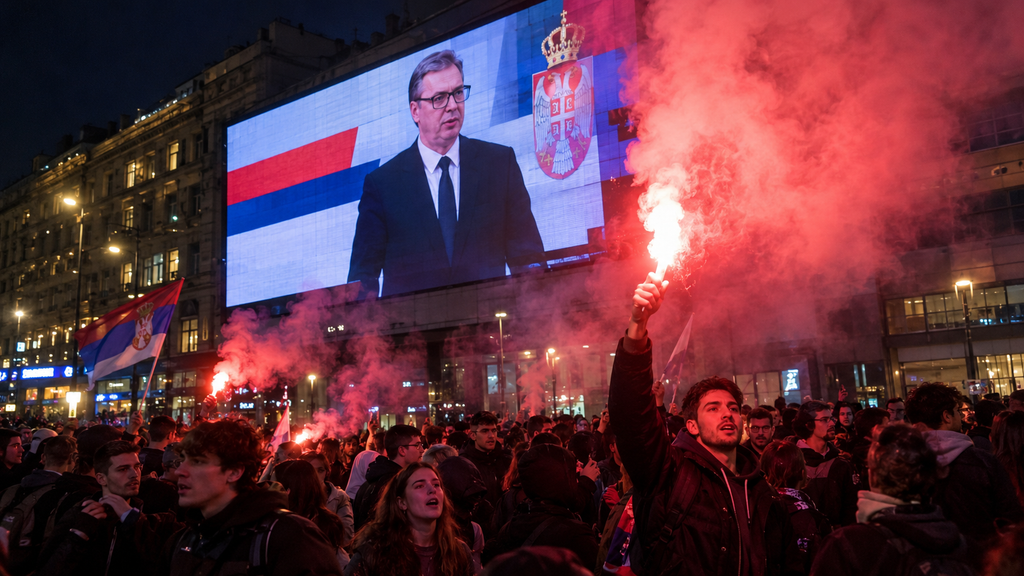
The Serbia election 2026 was about more than which party would control parliament. Public accountability, corruption concerns, democratic standards, and trust in government were central issues in the campaign. The original protests followed the Novi Sad railway station tragedy, but the movement grew as demonstrators called for broader institutional changes. Supporters wanted greater transparency in public decision-making and stronger accountability when officials or institutions failed. The campaign also highlighted questions about media independence and whether political competition offered a fair opportunity to different groups. The ruling party, meanwhile, maintained its own arguments about its record and plans for the country. These competing views made the election a wider debate about how Serbia should be governed. Economic concerns also mattered to voters, including jobs, public services, and the future opportunities available to younger generations. The student movement’s challenge was to connect its demands for political reform with practical plans that could improve everyday life. Voters’ support indicated that these issues had become important factors in the country’s political direction.
How the Student List Turned Protest Into Votes
A protest movement can attract large crowds without necessarily winning an election. The Student List’s progress showed how a campaign can move from public demonstrations into formal electoral competition. Over time, the student-led effort developed a national profile, attracted supporters beyond universities, and presented itself as an alternative to the ruling political camp. Its campaign gave people who were dissatisfied with the existing leadership a way to express their views through the ballot box. This was especially important because the movement had built its reputation through sustained public participation rather than through a traditional political machine alone. The election also demonstrated that voters can use parliamentary elections to send a strong message about public trust and political accountability. Preliminary estimates reported after voting suggested that the Student List could secure around 138 seats in the 250-seat parliament, while the SNS was projected to win about 104. These figures were estimates rather than final certified results, but Vučić’s concession confirmed the significance of the setback. The final seat distribution and government arrangements remain important to follow.
Voter Turnout and the Importance of Public Participation
Voter participation was another important part of the Serbia election news. Reports described long lines at polling stations and turnout estimates of around 67.6% by 7 p.m., a figure reported by pollsters and monitors as exceptionally high. Strong participation can give an election added political significance because it shows that large numbers of citizens chose to take part in deciding the country’s future. In this contest, the student movement had spent months encouraging people to support political accountability and change. The high turnout therefore became part of the wider story about how the movement had developed from protests into an electoral challenge. However, turnout alone does not explain why each voter made a particular choice. Some people may have supported the Student List because of its reform promises, while others may have been motivated by dissatisfaction with the ruling party or by local concerns. A careful analysis should avoid assuming that every voter shared the same priorities. What is clear is that public participation gave the election national importance and helped make its outcome a major subject of international attention.
What the Election Result Could Mean for Serbia’s Future
The preliminary outcome could open a new chapter in Serbian politics, but the practical effects will depend on what happens after election day. If the Student List secures a parliamentary majority in the final results, its representatives will face the task of turning campaign demands into policies and institutional changes. That may include improving transparency, strengthening public accountability, and responding to concerns raised during the protests. Voters will also expect progress on everyday issues such as public services, economic opportunities, education, and confidence in government. At the same time, any new political leadership must work within Serbia’s legal and constitutional framework and demonstrate that its decisions are fair and effective. A strong electoral result can provide a mandate for reform, but it does not guarantee that every proposed change will be easy to deliver. Building a government, setting priorities, and maintaining public trust can be difficult, especially after a campaign marked by deep political divisions. The next stage will therefore be judged not only by promises, but by the policies adopted and the results people experience.
International Attention and the Wider Significance of the Student Movement
The Serbia election 2026 has attracted international attention because it highlights the potential influence of organised youth movements on national politics. Students in Serbia spent a long period protesting before their movement became a major electoral challenger. Their experience may interest observers in other countries where younger generations are concerned about public accountability, education, employment, or political representation. However, Serbia’s circumstances are specific to its own history, institutions, and political environment, so the outcome should not be treated as a formula that will automatically work elsewhere. International observers will also watch how the election’s outcome is implemented, whether institutions continue to operate effectively, and whether political rights are respected. Serbia’s future relationship with European institutions and other international partners may be affected by its domestic political direction, but the exact consequences will depend on decisions made by the incoming political leadership and its counterparts abroad. For now, the clearest lesson is that sustained public engagement can influence an election. The longer-term impact will depend on whether the new political moment leads to meaningful, accountable governance.
Conclusion
The Serbia election 2026 has become a landmark moment because a student-led movement transformed years of public protest into a serious electoral challenge. Beginning after the deadly Novi Sad railway station canopy collapse in 2024, the movement expanded its demands to include accountability, transparency, and broader institutional reform. Its growing support challenged the political dominance of Aleksandar Vučić and the Serbian Progressive Party. After the October 25 vote, Vučić conceded defeat based on preliminary estimates that placed the Student List ahead in the parliamentary race. The outcome signals a major shift in Serbian politics, although final certified results and the process of forming a government remain important next steps. The real test for the student-backed movement will be whether it can turn public expectations into practical reforms while maintaining transparency and public trust. For citizens, the election has created new hopes as well as questions about what comes next. For international observers, it offers a reminder that youth participation can shape political debate. Serbia’s next chapter will depend on what its leaders do after the votes have been counted.
FAQs
What happened in the Serbia election 2026?
Serbia held a parliamentary election on October 25, 2026. The student-backed Student List challenged the ruling Serbian Progressive Party. Aleksandar Vučić conceded defeat based on preliminary estimates, while final official results remained an important next step.
Why did the student movement become popular in Serbia?
The movement grew after 16 people died in the 2024 Novi Sad railway station canopy collapse. Students demanded accountability and transparency, and their protests expanded to include wider concerns about government institutions and corruption.
Who won the Serbia parliamentary election in 2026?
Preliminary estimates indicated that the Student List had won the election, and Vučić acknowledged his political camp’s defeat. The Student List was projected to receive approximately 138 seats, but readers should check certified results for the final seat count.
What is the Student List in Serbia?
The Student List is a student-backed electoral movement that emerged from anti-government protests. It attracted support by focusing on accountability, institutional reform, and public concerns. Its next challenge is to turn its campaign promises into workable policies.
What happens after the Serbia election 2026?
Election officials must complete the formal results process, and political representatives must proceed with government formation under Serbia’s constitutional system. The new parliamentary balance could influence future policies on transparency, public services, and institutional reform. The practical impact will depend on the decisions made by the incoming leadership.


0 Comments